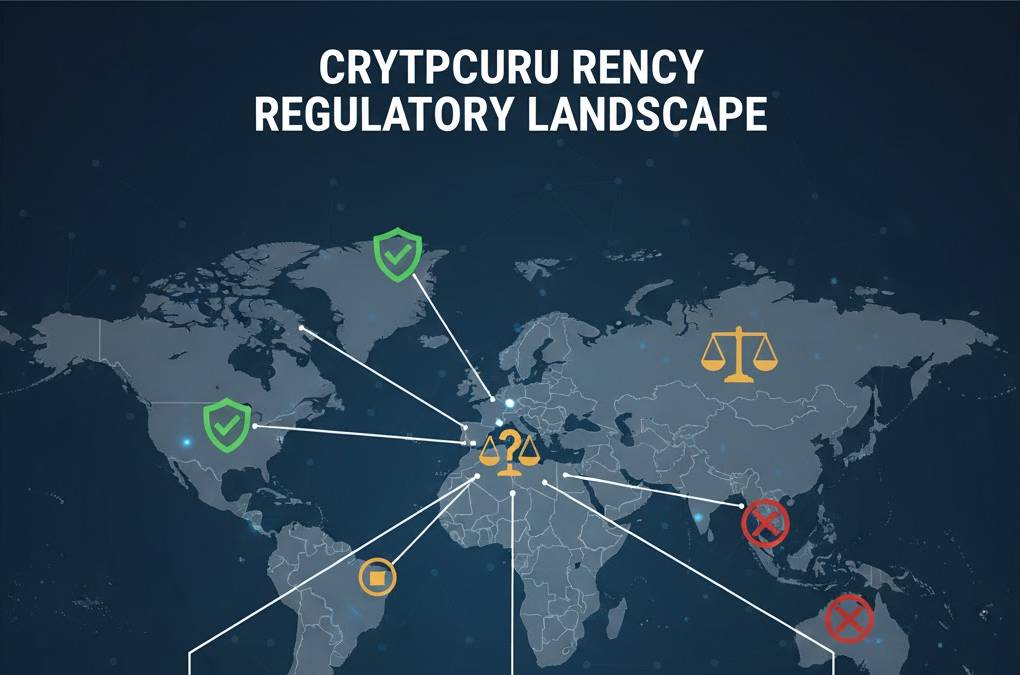
Cryptocurrency Regulatory Landscape: Global Overview
Understand cryptocurrency regulatory landscape: SEC, CFTC, FinCEN regulations, global compliance, and how regulations affect crypto markets, exchanges, and investors worldwide.
Cryptocurrency Regulatory Landscape: Global Rules and Compliance
Cryptocurrency regulations vary dramatically across countries and continue evolving rapidly. Understanding regulatory frameworks is essential for compliant crypto investing, trading, and using digital assets effectively.
US Regulatory Framework
The SEC and Securities Law
The Securities and Exchange Commission (SEC) oversees securities, including certain cryptocurrencies classified as securities. If a token is offered with expectations of profits from the efforts of others, the SEC classifies it as a security requiring registration or exemption. Bitcoin and Ethereum are not classified as securities, but many altcoins are considered securities, subjecting them to SEC rules.
The CFTC and Commodities Law
The Commodity Futures Trading Commission (CFTC) regulates cryptocurrency futures and commodities. Bitcoin and Ethereum are classified as commodities. This means derivatives trading is subject to CFTC rules. Leverage trading on unregistered platforms may violate CFTC regulations.
FinCEN and Anti-Money Laundering
The Financial Crimes Enforcement Network (FinCEN) enforces anti-money laundering (AML) and know-your-customer (KYC) requirements. Cryptocurrency exchanges and custodians must register as money services businesses and implement AML/KYC procedures. This is why legitimate exchanges require identification verification.
State Regulations and Money Transmitter Laws
Individual states regulate money transmitters. Cryptocurrency exchanges operating in multiple states must obtain money transmitter licenses from each state, which is expensive and complex. Some states have created favorable frameworks, while others have made crypto operations extremely difficult.
Tax Reporting Requirements
The IRS classifies cryptocurrencies as property, not currency. This means trading is taxable—every transaction creates a taxable event. Capital gains taxes apply whether you gain or lose. Even receiving airdrops is taxable income. The SEC requires reporting of crypto transactions on tax returns.
Recent US Regulatory Developments
Congress has proposed numerous bills attempting to clarify crypto regulation. Some propose creating new regulatory frameworks, others attempt to impose stricter rules. The regulatory landscape is shifting rapidly. Favorable developments include proposed stablecoin regulations and clearer commodity treatment for Bitcoin and Ethereum.
European Regulatory Framework
MiCA (Markets in Crypto-Assets Regulation)
The EU's comprehensive MiCA regulation treats crypto as a distinct asset class requiring registration and compliance. Cryptocurrency firms must obtain licenses from national regulators. MiCA establishes similar regulations to traditional finance, making the EU's approach one of the most comprehensive globally. The rules apply to stablecoins, crypto exchanges, custodians, and wallet providers.
AML/KYC Requirements
European regulations require cryptocurrency service providers to implement strict anti-money laundering and know-your-customer procedures. Crypto service providers must report suspicious transactions and maintain records. This creates a more regulated environment than early crypto development but similar to traditional banking.
Consumer Protection
The EU imposes consumer protection standards on crypto service providers. Requirements include clear disclosure of risks, segregation of customer assets, and insurance coverage. These rules protect retail investors from fraud and operational failures.
Asian Regulatory Approaches
Japan's Approach
Japan has adopted a regulated licensing system for crypto exchanges under the Payment Services Act. Exchanges must meet strict security and capital requirements. This framework balances innovation with consumer protection. Japan has some of the world's largest regulated exchanges.
Singapore and Hong Kong
Both Asian financial centers have embraced cryptocurrency with regulatory clarity. Singapore's Monetary Authority regulates crypto exchanges under the Payment Services Act, similar to Japan. Hong Kong allows crypto trading with strict regulatory oversight. Both jurisdictions attract crypto companies with clear rules.
China's Ban
China has implemented an outright ban on cryptocurrency trading and mining. All cryptocurrency exchanges have been shut down, and mining operations are prohibited. This eliminated China from the global crypto market, though enforcement varies by region. Some Ethereum mining migrated to other countries following bans.
India's Evolving Regulations
India has alternated between crypto bans and regulatory frameworks multiple times. Most recently, India has moved toward regulation rather than prohibition. Tax rules classify crypto as property with capital gains taxes. Regulatory clarity remains limited, creating uncertainty for Indian investors and platforms.
Stablecoin Regulation
Growing Focus on Stablecoins
Stablecoins—cryptocurrencies pegged to fiat currency like the US Dollar—have attracted regulatory scrutiny. Governments worry stablecoins could impact monetary policy and financial stability if widely adopted. Multiple regulatory proposals specifically address stablecoins.
Reserve Requirements
Regulators increasingly require stablecoin issuers to maintain 100% reserves backing the stablecoin. If a stablecoin claims to be worth $1, the issuer must hold $1 in actual assets. This prevents fractional reserve problems but increases issuance costs. Some stablecoin issuers resist this requirement.
Redemption Rights
Regulations may require stablecoin holders to redeem stablecoins for underlying assets at the claimed value. This protects users but requires issuers to maintain significant liquidity and capital. It's similar to requiring banks to maintain sufficient liquid assets to meet withdrawal demands.
DeFi and Smart Contract Regulation
Regulatory Gap
Decentralized finance (DeFi) protocols that aren't controlled by any single entity exist in a regulatory gray area. If a DeFi platform offers yield farming, is it offering unregistered securities? If it facilitates derivatives trading, does it violate commodity regulations? Regulators are still determining answers.
Developer Liability
A key question is whether DeFi developers bear liability for how their code is used. If someone uses a DeFi protocol to conduct illegal activities, can developers be prosecuted? This question remains unresolved in most jurisdictions, creating uncertainty for DeFi developers.
Smart Contract Auditing
As regulation increases, auditing and code review may become mandatory before deploying certain smart contracts. This increases development costs but may improve security and reduce fraud risk. The crypto industry is developing standards for code auditing.
NFT Regulation
Securities Classification
Some NFTs might be classified as securities if they convey ownership rights, voting rights, or profit participation. This is an evolving area where regulatory guidance remains limited. NFT creators should consider whether their NFTs might be classified as securities.
Anti-Money Laundering Concerns
NFTs can be used for money laundering or sanctions evasion through high-value trades. Regulators are examining NFT marketplaces for AML compliance. Legitimate NFT platforms are implementing KYC and AML procedures to prevent illicit use.
Crypto Exchange Regulations
Custody Requirements
Many jurisdictions now require crypto exchanges and custodians to segregate customer assets from company assets. This ensures that if an exchange goes bankrupt, customer funds are protected. Some jurisdictions additionally require insurance coverage for customer assets.
Market Manipulation Prevention
Regulated exchanges must implement surveillance and reporting systems to detect market manipulation. Requirements include reporting wash trading, spoofing, and suspicious patterns. Unregulated exchanges lack these protections, creating risks for traders on those platforms.
Disclosure and Transparency
Regulated exchanges must disclose fees, funding methods, security practices, and asset custody arrangements. Transparency allows users to make informed choices about which exchanges to use. Lack of transparency suggests avoiding a platform.
International Coordination
FATF Guidance
The Financial Action Task Force (FATF) is an intergovernmental organization that develops AML/KYC standards. FATF has issued guidance on cryptocurrency AML/KYC requirements that countries are adopting. This creates consistency across jurisdictions.
BIS and Financial Stability
The Bank for International Settlements (BIS) studies cryptocurrency's impact on financial stability. While cryptocurrencies currently represent a small percentage of global assets, rapid growth could create systemic risks. International regulators monitor crypto market development.
Bilateral Agreements
Countries are developing bilateral agreements for crypto tax and regulatory enforcement. As crypto markets grow, international coordination becomes essential to prevent regulatory arbitrage where bad actors migrate to permissive jurisdictions.
Impact of Regulation on Crypto Markets
Short-Term Market Impact
Regulatory announcements often cause sharp price movements. Negative regulatory news causes crashes. Positive regulatory developments cause rallies. This volatility creates trading opportunities but also risks for long-term investors. Major regulatory news should be monitored carefully.
Long-Term Market Impact
Clearer regulations tend to increase institutional adoption, which benefits crypto markets long-term. Bitcoin's price correlation with regulatory clarity has been documented—positive regulatory news correlates with bull markets, while regulatory uncertainty correlates with bear markets.
Innovation Impact
Heavy regulation can stifle innovation. Some companies relocate to more favorable jurisdictions. However, too-permissive environments allow fraud and scams. The optimal balance—clear rules that allow innovation while protecting consumers—is what most jurisdictions are seeking.
Adoption Impact
Regulation increases institutional and retail adoption by reducing legal uncertainty. Regulated custody solutions allow institutions to invest confidently. Clearer tax rules help retailers understand tax obligations. Overall, reasonable regulation has historically benefited crypto adoption.
Compliance for Crypto Users
Tax Compliance
Keep detailed records of all cryptocurrency transactions—purchases, sales, exchanges, mining, and airdrops. Track cost basis and sale prices. Report gains and losses on tax returns. Use specialized crypto tax software like Koinly or CoinTracker to calculate tax liability accurately.
KYC Compliance
When using regulated exchanges, provide required identification and personal information. This protects you legally and makes the exchange compliant. Avoid platforms that don't require KYC, as they attract scammers and regulatory pressure.
Travel Rules
If transferring large amounts internationally, know your jurisdiction's rules for currency movement. Some countries require declaring large transfers. Regulatory developments may impose "travel rules" requiring exchanges to track who sends and receives transfers, similar to banking systems.
Future Regulatory Trends
Central Bank Digital Currencies (CBDCs)
Governments are developing central bank digital currencies—digital versions of fiat currency controlled by central banks. CBDCs will likely increase regulation of private cryptocurrencies and change how crypto fits within financial systems.
Increased Compliance Costs
As regulation increases, compliance costs will rise. Smaller platforms may be forced to consolidate or exit the market. Large, well-funded platforms will dominate as they can afford compliance infrastructure. This consolidation may reduce innovation but improve consumer protection.
Convergence of Standards
Global regulatory standards will gradually converge through international coordination. This reduces regulatory arbitrage opportunities but makes compliance easier and clearer for global platforms.
Conclusion
Cryptocurrency regulation is evolving rapidly worldwide. Understanding your jurisdiction's regulatory framework is essential for compliant crypto participation. Follow regulations by using licensed exchanges, maintaining tax records, and staying informed about regulatory developments. Regulatory clarity, while sometimes restrictive short-term, typically benefits cryptocurrency adoption and legitimacy long-term.
Regulation is not necessarily bad for crypto. Clear rules attract institutional investors, reduce fraud, and increase consumer protection. While some fear excessive regulation will stifle innovation, reasonable regulatory frameworks have historically benefited cryptocurrency adoption and maturation.