Crypto Wallets: Types, Security, and How to Choose
Complete guide to cryptocurrency wallets: hot vs cold storage, hardware wallets, software wallets, security best practices, and how to choose the right wallet for your crypto assets.
Crypto Wallets: Types, Security, and How to Choose
A cryptocurrency wallet is essential for storing, sending, and receiving digital assets. This comprehensive guide covers the different types of wallets, security considerations, and how to choose the right one for your needs.
What Is a Cryptocurrency Wallet?
A cryptocurrency wallet is a digital tool that allows you to store, manage, and transact with cryptocurrencies like Bitcoin and Ethereum. Unlike traditional wallets that hold physical cash, crypto wallets store your private keys—the cryptographic codes that prove ownership of your digital assets and authorize transactions.
Every cryptocurrency wallet consists of two essential components: a public key (your wallet address) and a private key (your secret access code). Your public key is like your bank account number—you can share it with anyone to receive funds. Your private key is like your password—you should never share it with anyone, as it grants complete control over your funds.
Hot Wallets vs Cold Storage
The most important distinction in cryptocurrency wallets is between hot wallets and cold storage. This classification relates to whether your wallet is connected to the internet or not, which directly impacts security and convenience.
Hot Wallets
Hot wallets are connected to the internet at all times, making them convenient for frequent transactions and everyday use. They're ideal for traders, active investors, and anyone who needs quick access to their funds. Hot wallets can be accessed from computers, smartphones, or through web browsers.
The main advantage of hot wallets is convenience—you can access your funds quickly and easily from anywhere. However, this comes with increased security risks. Because they're internet-connected, hot wallets are more vulnerable to hacking, malware, and phishing attacks. Cybercriminals can potentially steal your private keys if your device is compromised.
For this reason, security experts recommend keeping only a small amount of cryptocurrency in hot wallets—typically the amount you plan to use for near-term transactions. Think of it like the cash in your physical wallet versus money in your bank account.
Cold Storage
Cold storage refers to keeping your cryptocurrency offline and disconnected from the internet. This method provides maximum security because offline wallets are virtually immune to online attacks. Your private keys are stored on a device or medium that has no internet connection, making them inaccessible to hackers.
The tradeoff is convenience. Accessing funds in cold storage is slower and more cumbersome than hot wallet transactions. You may need to connect a device, input multiple passwords, or perform several steps to authorize a transaction. Cold storage is best suited for long-term holding of large amounts of cryptocurrency.
Types of Cryptocurrency Wallets
Hardware Wallets
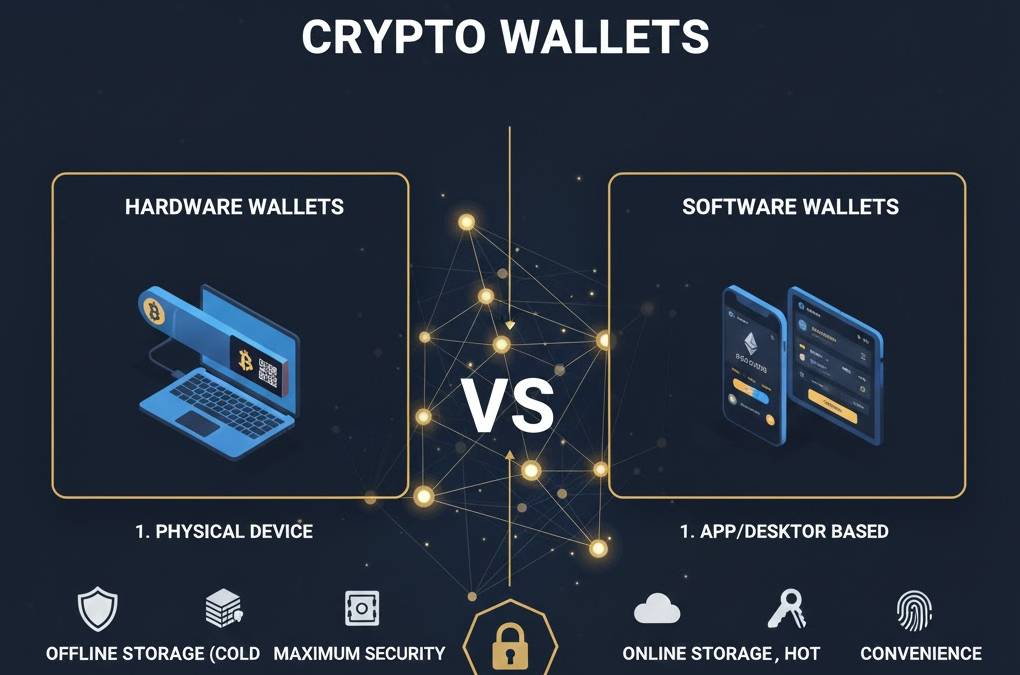
Hardware wallets are physical devices specifically designed to store cryptocurrency private keys offline. These USB-like devices generate and store your private keys on the hardware itself, never exposing them to your computer or the internet. Popular hardware wallet manufacturers include Ledger, Trezor, and KeepKey.
Hardware wallets work by signing transactions on the device itself. When you want to send cryptocurrency, you connect the hardware wallet to your computer, authorize the transaction on the device's screen, and the transaction is signed without ever exposing your private key to online threats.
Advantages of hardware wallets include:
- Maximum security for offline storage of private keys
- Protection against malware and viruses on your computer
- Support for multiple cryptocurrencies on a single device
- Backup and recovery features for wallet restoration
- PIN protection to prevent unauthorized access
The main disadvantages are cost (hardware wallets typically range from $50-$200) and the need to have the physical device to access your funds.
Software Wallets
Software wallets are applications installed on your computer or smartphone. They store your private keys in encrypted form on your device. Software wallets can be either hot wallets (if the device is internet-connected) or cold wallets (if stored on an offline computer).
Popular software wallet options include:
- Desktop Wallets: Applications installed on your computer like Exodus, Atomic Wallet, or Bitcoin Core. These offer good security and control while still providing convenient access to your funds.
- Mobile Wallets: Smartphone applications like Trust Wallet, Coinbase Wallet, or Mycelium. These are convenient for daily transactions and on-the-go access.
- Web Wallets: Browser-based wallets accessible from any device. These are the most convenient but also carry higher security risks as your keys may be stored on a third-party server.
Paper Wallets
A paper wallet is one of the oldest forms of cold storage. It involves printing your public and private keys onto a piece of paper. This completely offline approach provides excellent security for long-term storage since the keys never exist digitally on internet-connected devices.
To use a paper wallet, you would need to import the private key into a software wallet when you want to make a transaction. Paper wallets require careful handling—the paper must be protected from damage, loss, or theft. Some people store multiple copies in secure locations or use waterproof materials for extra durability.
Brain Wallets
A brain wallet is a method of storing cryptocurrency by memorizing your private key or using a memorable passphrase to generate it. This approach requires no physical device or paper, making it extremely portable.
However, brain wallets are risky because human-generated passphrases are often vulnerable to brute-force attacks. If the passphrase isn't sufficiently random or complex, hackers can potentially guess it and steal your funds. Security experts generally recommend against using brain wallets for significant amounts of cryptocurrency.
Custodial vs Non-Custodial Wallets
Another important classification relates to who controls your private keys.
Non-Custodial Wallets
Non-custodial wallets give you full control over your private keys. You alone are responsible for managing your funds, security, and backups. When you use a non-custodial wallet, the private keys are generated and stored on your device, and you are the sole custodian of your assets.
Non-custodial wallets align with the philosophy of cryptocurrency—eliminating the need for trusted third parties. However, this also means you bear full responsibility for security. If you lose your private keys or recovery seed, you permanently lose access to your funds with no recovery option.
Custodial Wallets
Custodial wallets are managed by a third party, typically a cryptocurrency exchange or platform. Companies like Coinbase, Kraken, and Binance manage your private keys for you. This means the company technically holds your funds, though you have a claim on them through your account.
Custodial wallets offer convenience and easier account recovery if you forget your password. However, they introduce counterparty risk—you must trust the company to keep your funds secure and solvent. This is why many cryptocurrency advocates recommend custodial wallets primarily for trading, not for long-term storage of large amounts.
Security Best Practices for Wallets
Backup Your Recovery Seed
Most modern wallets generate a recovery seed—a list of 12 or 24 words that can regenerate your private keys. Write this seed down on paper and store it in a secure location. Never store it digitally on internet-connected devices, and never share it with anyone.
Use Strong Passwords and PINs
Protect wallet applications with long, complex passwords and enable PIN protection on hardware wallets. Avoid using easily guessable information like birthdays or names.
Enable Two-Factor Authentication
For custodial wallets and exchange accounts, enable two-factor authentication (2FA) using authenticator apps rather than SMS when possible.
Keep Your Private Keys Secret
Never share your private keys with anyone, including wallet developers or customer support. Legitimate support staff will never ask for your private keys.
Use Different Wallets for Different Purposes
Consider using separate wallets for daily transactions (hot wallet), long-term storage (cold storage), and trading on exchanges. This limits your exposure if one wallet is compromised.
Verify Addresses Carefully
When sending cryptocurrency, always verify the recipient address carefully. Cryptocurrency transactions are irreversible, so sending to the wrong address results in permanent loss of funds.
Stay Updated
Keep your wallet software updated with the latest security patches and improvements. Developers regularly release updates to address security vulnerabilities.
Choosing the Right Wallet for Your Needs
For Daily Traders
If you actively trade cryptocurrency, a hot wallet on your computer or smartphone provides the convenience you need. Mobile wallets like Trust Wallet or Coinbase Wallet offer quick access and reasonable security for smaller amounts.
For Long-Term Holders
If you're holding cryptocurrency as a long-term investment, a hardware wallet like Ledger or Trezor provides the best combination of security and accessibility. The investment in a hardware wallet ($50-$200) is worthwhile for protecting larger amounts of cryptocurrency.
For Large Holdings
If you have substantial cryptocurrency holdings, consider a multi-signature wallet that requires multiple private keys to authorize transactions. You can distribute keys across different locations, making it nearly impossible for someone to steal all your funds. Multi-signature wallets are also useful for organizations holding shared assets.
For Beginners
Beginners should start with a reputable custodial wallet on an established exchange like Coinbase or Kraken. Once you're comfortable with how cryptocurrency works, you can graduate to non-custodial wallets for better security and control.
Wallet Comparison Summary
Here's a quick comparison of wallet types:
| Wallet Type | Security | Convenience | Cost |
|---|---|---|---|
| Hardware Wallet | Excellent | Fair | $50-$200 |
| Software Wallet (Desktop) | Good | Very Good | Free |
| Mobile Wallet | Good | Excellent | Free |
| Web Wallet | Fair | Excellent | Free |
| Paper Wallet | Excellent | Poor | Free |
| Custodial Wallet | Depends on Provider | Excellent | Free |
Common Wallet Mistakes to Avoid
Losing Your Recovery Seed
If you lose your 12 or 24-word recovery seed and don't have backups, you permanently lose access to your funds. Store multiple copies in secure locations.
Reusing Addresses
While technically possible, reusing the same receiving address for multiple transactions reduces privacy. Consider using a new address for each transaction when possible.
Using Weak Passwords
A weak password makes your wallet vulnerable to brute-force attacks. Use passwords with a mix of uppercase and lowercase letters, numbers, and special characters.
Trusting Suspicious Links
Phishing websites and emails can trick you into entering your private keys or recovery seed. Only access your wallet through official apps and websites you've bookmarked.
Ignoring Security Updates
Wallet developers regularly release security patches. Ignoring updates leaves you vulnerable to known exploits.
Keeping All Funds in One Wallet
If one wallet is compromised, you could lose everything. Diversify your holdings across multiple wallets, including both hot and cold storage.
The Future of Crypto Wallets
The cryptocurrency wallet landscape continues to evolve. Several emerging trends are shaping the future:
Self-Custodial Solutions: More platforms are moving toward giving users control over their private keys while maintaining ease of use.
Multi-Chain Wallets: Modern wallets support multiple blockchains and cryptocurrencies, allowing you to manage diverse assets in one place.
Account Abstraction: New standards are making wallets more user-friendly by allowing social recovery and other advanced features.
Hardware Wallet Innovation: Hardware wallets are becoming more user-friendly with features like biometric authentication and wireless connectivity.
Conclusion
Choosing the right cryptocurrency wallet is one of the most important decisions you'll make as a crypto user. The ideal wallet depends on your specific needs: how much cryptocurrency you own, how frequently you trade, and how important security versus convenience is to you.
Remember the fundamental principle of cryptocurrency: "not your keys, not your coins." When you use a non-custodial wallet, you have complete control and responsibility for your funds. This is powerful but requires you to take security seriously. Whether you choose a hardware wallet for maximum security, a software wallet for convenience, or a custodial wallet for ease of use, make sure you understand the tradeoffs and take appropriate precautions to protect your digital assets.
Start with a reputable wallet from an established provider, secure your recovery seed, and never share your private keys with anyone. As you gain experience and confidence with cryptocurrency, you can explore different wallet types and find the solution that works best for your situation.